
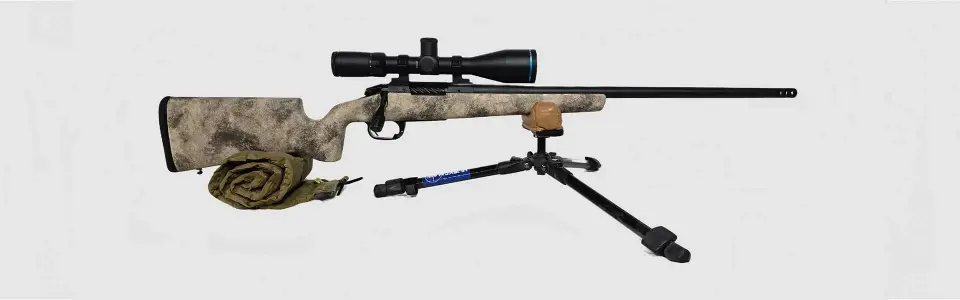

Accurate Rifles & Long Range Shooting Systems: What Separates Precision from Guesswork
For serious marksmen, hunters, and competitive shooters, the difference between a good shot and a great one often comes down to the equipment behind the trigger. Building or buying accurate rifles isn't just about a quality barrel — it's about understanding how every component works together as part of a complete long range shooting system designed for consistency, repeatability, and precision at distance.
What Actually Makes a Rifle Accurate
Accuracy is often misunderstood as a single feature rather than the result of multiple precisely engineered components working in harmony. True accuracy depends on:
- Barrel quality and consistency – including bore straightness, rifling precision, and consistent chamber dimensions that produce uniform bullet engagement shot after shot.
- Action rigidity – a stiff, well-bedded action reduces flex and vibration that can throw off bullet trajectory.
- Stock and bedding – proper bedding ensures the action sits consistently in the stock, eliminating shot-to-shot variance caused by stock flex or pressure points.
- Trigger quality – a clean, consistent trigger pull reduces shooter-induced error, which becomes increasingly important as distance increases.
- Ammunition consistency – even the most accurate rifle underperforms with inconsistent or poorly matched ammunition.
Many shooters focus heavily on the barrel alone, but a truly accurate rifle is the product of every component being matched and tuned to work together — which is exactly why custom and semi-custom rifle builders have grown in popularity among serious long-range shooters.
Understanding a Long Range Shooting System
While "accurate rifle" describes the firearm itself, a long range shooting system encompasses everything required to consistently hit targets at extended distances — often 500 yards and beyond. This includes:
- Optics – high-quality scopes with precise, repeatable turrets and reliable reticle systems for accounting for bullet drop and wind drift.
- Ballistic calculation – understanding how environmental factors like wind, temperature, altitude, and humidity affect bullet trajectory over distance.
- Rangefinding equipment – accurate distance measurement is critical, since even small errors compound significantly at longer ranges.
- Consistent ammunition selection – often handloaded or carefully selected factory ammunition matched specifically to the rifle's barrel twist and chambering.
- Shooter fundamentals – proper breathing, trigger control, and body positioning remain essential, since no equipment can fully compensate for inconsistent shooting technique.
A long range shooting system treats the rifle as one piece of a larger puzzle, where optics, ammunition, environmental data, and shooter skill all need to align for consistent results at distance.
Why Component Matching Matters
One of the most common mistakes shooters make is assembling a rifle from mismatched components without considering how they interact. A premium barrel paired with a poorly bedded stock, or a high-end scope mounted with inconsistent rings, can undermine even the best individual parts. This is why working with experienced rifle builders who understand the full system — not just individual components — produces noticeably better long-range results.
This kind of comprehensive approach to rifle building and system integration is the focus at Peterson Rifles (petersonrifles.com), where attention to component matching and build quality aims to deliver rifles capable of consistent, repeatable accuracy for long-range shooting applications.
Final Thoughts
Whether you're a competitive long-range shooter, a serious hunter, or simply passionate about precision marksmanship, understanding that accuracy comes from the entire system — not just the rifle alone — is key to achieving consistent results. Investing in quality components, proper build integration, and disciplined shooting fundamentals together form the foundation of any successful long range shooting system.